
Uncategorized | August 21, 2026
When to schedule a sewer inspection in Beachwood to prevent costly repairs
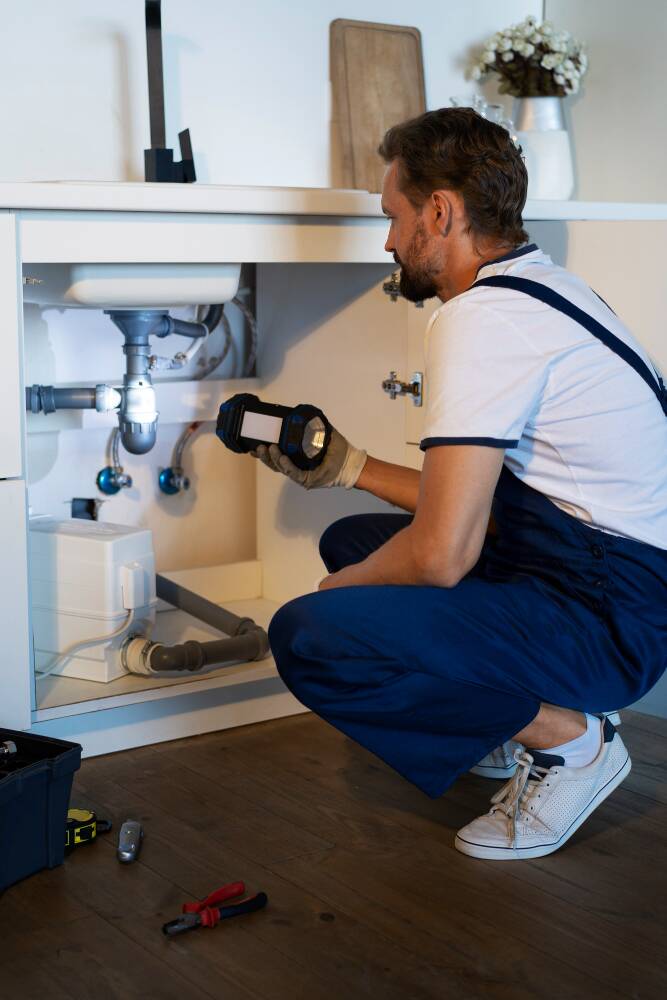
Most Beachwood homeowners never think about the sewer line running beneath their property until something goes wrong. A backed-up basement drain, a persistent smell near the foundation, or a patch of grass that stays suspiciously green through a dry stretch can all point to a sewer line that has been deteriorating for years without any visible sign above ground.
Scheduling a sewer inspection before those symptoms turn into emergencies is one of the most effective ways to protect your home and your budget.
Beachwood sits in eastern Cuyahoga County, and much of its housing stock dates to the mid-twentieth century. The median construction year for homes here is 1975, which means a large share of residential sewer laterals are running on original clay or cast iron pipe that has been in the ground for 50 years or longer.
Those materials were reliable when they were installed, but decades of soil movement, root intrusion, and Northeast Ohio’s relentless freeze-thaw cycles have taken a measurable toll on underground infrastructure across the region.
A professional sewer camera inspection takes the guesswork out of the equation. A small, high-resolution camera feeds through the line and records real-time video of the pipe’s interior, revealing cracks, root masses, bellies, offsets, and buildup that no amount of surface-level observation can detect.
For Beachwood homeowners, understanding when and why to schedule that inspection is the difference between a manageable maintenance task and a five-figure excavation project.
In this article, you will learn about:
- Warning signs that your Beachwood sewer line needs immediate attention
- How Beachwood’s aging infrastructure puts your home at risk
- The best times of year to schedule a sewer inspection in Northeast Ohio
- What a professional sewer camera inspection actually reveals
- How proactive inspections save Beachwood homeowners thousands
Keep reading to learn exactly when to call for a sewer inspection so you can catch small problems before they become expensive emergencies.
Warning signs that your Beachwood sewer line needs immediate attention
Sewer line damage rarely announces itself with a single dramatic event. In most cases, the first clues are subtle, and they build gradually over weeks or months. Knowing what to watch for gives you the chance to act early rather than react to a full-blown backup.
The challenge for homeowners is that many of these warning signs overlap with routine plumbing annoyances. A slow drain in one sink might be a simple clog, but the same symptom showing up in multiple fixtures at once almost always points to a deeper problem in the main sewer line. The key is recognizing the patterns that separate a minor inconvenience from a developing emergency.
Multiple drains slowing down at the same time
When a single drain runs slowly, the blockage is usually isolated to that fixture’s trap or branch line. When two or more drains in different parts of the house start backing up around the same time, the obstruction is almost certainly in the main sewer line connecting your home to the municipal system.
Pay attention to what happens when you flush a toilet or run the washing machine. If water backs up into a basement floor drain or a shower stall on the lowest level, waste is hitting a restriction somewhere downstream. That restriction could be a root mass, a collapsed section, or a belly where the pipe has settled and sediment has accumulated.
Common signs that a main line blockage is developing include:
- Water backing up in a basement floor drain or shower when you run the washing machine
- Gurgling sounds coming from toilets or sinks in rooms you are not using
- Multiple fixtures draining slowly at the same time, especially on the lowest level
- A toilet that flushes normally on the upper floor but triggers a backup downstairs
Any combination of these symptoms points to a shared downstream obstruction rather than an isolated fixture problem.
In older Beachwood homes with clay pipe, the joints between pipe sections are the most vulnerable points. Clay joints were sealed with mortar or rope filler that degrades over time, and once a joint loosens, roots find their way in. According to research published by the U.S. Forest Service, tree roots are responsible for more than 50% of all sewer blockages, and the problem is most severe in older systems with deteriorated joints.
Sewage odors near the foundation or in the basement
A functioning sewer line is a sealed system. You should never smell raw sewage inside your home or near your foundation. If you catch a persistent sewer odor coming from a basement drain, a floor drain, or from the soil outside near the cleanout, the line has been compromised somewhere.
Cracked pipes and separated joints allow sewer gas to escape into the surrounding soil, and that gas migrates upward through the foundation and into the home. In Beachwood, where many homes have finished basements, a sewer gas leak can go unnoticed until the smell becomes impossible to ignore. The gases themselves are more than unpleasant. Hydrogen sulfide, ammonia, and methane are all components of sewer gas, and prolonged exposure in an enclosed space presents a genuine health risk.
A camera inspection pinpoints the exact location and cause of the breach so repairs can target the problem directly rather than relying on guesswork. Professional underground plumbing diagnostics use a combination of camera footage and locating equipment to identify precisely where the issue sits and how deep it runs.
Unexplained wet spots or lush patches in the yard
Sewer lines run from the house to the street or to a municipal connection, typically at a depth of four to eight feet in this part of Ohio. When a section of pipe cracks or a joint separates, nutrient-rich wastewater leaks into the surrounding soil. Grass and plants growing directly above the leak receive a constant supply of moisture and organic matter, and they respond by growing noticeably faster and greener than the surrounding lawn.
If you notice a strip or patch of your yard that stays green and damp when everything else is dry, or if the ground feels soft or spongy in one specific area, the sewer lateral beneath it may be leaking. Left unchecked, the escaping water erodes the soil around the pipe, which causes the pipe to settle further and creates a belly or a full collapse.
Wet spots near the foundation also increase the risk of water damage to the structure itself. Saturated soil against a basement wall creates hydrostatic pressure that can force moisture through cracks in the foundation, compounding the problem well beyond the sewer line. Homes with a sump pump may see the pump running more frequently than usual as groundwater levels rise around the leak.
How Beachwood’s aging infrastructure puts your home at risk
Beachwood is a well-established community, and that history comes with infrastructure that has been in the ground for decades. The sewer laterals running from individual homes to the municipal system were installed when the homes were built, and most have never been replaced. Understanding the condition of that underground infrastructure is the first step toward protecting your property.
The broader picture in Northeast Ohio reinforces why local homeowners should pay attention. The Northeast Ohio Regional Sewer District is operating under a federal consent decree known as Project Clean Lake, a $3 billion, 25-year program to reduce raw sewage discharges into area waterways. That investment addresses the public side of the system, but the private lateral connecting your home to the street remains your responsibility.
Clay and cast iron pipes reaching the end of their lifespan
Homes built in Beachwood during the 1950s, 1960s, and 1970s were typically connected to the municipal sewer with vitrified clay pipe or cast iron pipe. Both materials were industry standard at the time, and both have a practical service life that tops out in the 50-to-75-year range under ideal conditions.
Clay pipe is rigid and brittle. It relies on mortar-sealed joints between short sections, and those joints are the weakest link in the system. Over decades, the mortar deteriorates, joints shift, and gaps open up. Cast iron is more flexible, but it corrodes from the inside out as acids in wastewater eat away at the metal. Eventually, the pipe wall thins to the point where it cracks or collapses under the weight of the soil above it.
The typical failure progression in aging sewer laterals follows a predictable sequence:
- Joint sealant deteriorates, allowing small amounts of groundwater to seep in or out
- Root tips detect moisture leaking from the compromised joint and grow toward it
- Roots enter the pipe and expand, catching debris and narrowing the flow path
- Soil shifts around the weakened section, creating offsets or bellies
- The pipe cracks, collapses, or blocks completely, requiring emergency intervention
Each stage gives homeowners a narrower window to act. A camera inspection catches the process at stage one or two, when the fix is still affordable and minimally disruptive.
Beachwood’s median home construction year of 1975 means that a significant portion of the city’s residential sewer laterals have been in service for roughly 50 years. Many are already at or past the point where proactive inspection is not optional. It is a necessity.
Northeast Ohio’s freeze-thaw cycles stress buried pipes
Ohio’s clay-heavy glacial till soil is particularly hard on underground pipes. The soil retains moisture, and when temperatures drop below freezing, that moisture expands. When temperatures rise, the soil contracts. This freeze-thaw cycle repeats dozens of times every winter, and each cycle exerts physical pressure on buried pipes.
The American Society of Civil Engineers gave U.S. wastewater infrastructure a D+ grade in its 2025 Report Card, noting that the average number of collection system failures for combined water utilities increased from 2 to 3.3 per 100 miles of pipe over the past decade. That trend reflects aging systems under growing environmental stress, and Northeast Ohio’s climate is a direct contributor.
For Beachwood specifically, frost heave does not usually freeze the sewer line itself, which typically sits four to eight feet below grade. What it does is shift the soil around the pipe, stress rigid clay joints, and widen existing cracks. Damage from a January freeze may not produce symptoms until February or March, when root growth resumes and debris starts catching on the newly weakened sections.
Tree root intrusion is the most common culprit
Beachwood’s mature tree canopy is one of its most appealing features. Maple, oak, and other hardwoods line residential streets throughout the city. Their root systems spread far beyond the visible canopy, and those roots actively seek moisture and nutrients.
A sewer line with even a hairline crack or a slightly loosened joint releases trace amounts of moisture and organic vapor into the surrounding soil. Roots detect that moisture gradient and grow toward it. Once a root tip enters the pipe, the warm, nutrient-rich environment inside accelerates growth. Over time, a single root thread becomes a tangled mass that traps grease, paper, and waste, progressively restricting flow until the line backs up entirely. The damage from tree root sewer intrusion is not limited to Beachwood. Neighboring communities like Shaker Heights deal with the same issue across their older housing stock.
Root intrusion is treatable when caught early. Hydro jetting can clear root masses and restore full flow, and a camera inspection afterward confirms whether the pipe itself is still structurally sound. When intrusion is ignored, roots can exert enough pressure to crack the pipe further or collapse it, at which point the repair moves from a cleaning to a full sewer line repair or replacement.
The best times of year to schedule a sewer inspection in Northeast Ohio
Timing matters when it comes to sewer inspections. Certain seasons in the Cleveland area create conditions that are harder on sewer lines, and scheduling an inspection around those pressure points gives you the best chance of catching problems before they escalate.
There is no single “right” time that applies to every home, but there are windows that consistently make the most sense based on how Northeast Ohio’s climate interacts with aging underground pipes. Planning your inspection around these seasonal patterns puts you ahead of the damage curve.
Early spring, before root growth accelerates
Late March through April is one of the most effective windows for a sewer inspection in Beachwood. The ground is thawing, and the freeze-thaw stress of winter has done its worst. Any new cracks, joint separations, or pipe shifts caused by frost heave are now present but may not yet be causing visible symptoms inside the house.
At the same time, tree roots are entering their most aggressive growth phase. Soil temperatures are rising, moisture levels are high from snowmelt and spring rain, and root systems are actively expanding. If a winter freeze opened a gap in a clay joint, roots will find it within weeks.
Scheduling a camera inspection in early spring catches winter damage before root growth compounds it. A plumber can identify cracks, offsets, and early-stage root intrusion while the problems are still small enough to address with cleaning and targeted repair rather than full excavation.
Spring inspections are especially important for homes that match any of the following criteria:
- Built before 1980 with original clay or cast iron sewer laterals
- Mature trees growing within 15 feet of the sewer line’s path to the street
- A history of slow drains or minor backups during previous winters
- Located on a slope or in an area with known soil settlement issues
If your home checks even one of those boxes, an early spring inspection is a smart investment.
Late fall, before the first hard freeze
October and November offer a second strategic window. By late fall, you can assess the cumulative effect of the growing season on your sewer line. Root mass that built up over spring and summer is at its maximum extent, and a camera inspection reveals exactly how much intrusion has occurred.
Clearing roots and addressing minor damage before the ground freezes protects the pipe through winter. A clean, structurally sound pipe handles the freeze-thaw cycle far better than one already compromised by root intrusion or sediment buildup. Pairing a fall inspection with preventive drain maintenance keeps your system in the best possible condition heading into the coldest months. Fall inspections also tend to be easier to schedule because demand for emergency plumbing services drops compared to the peak summer and winter months.
Homeowners who have had basement drain backups in previous years should treat a fall inspection as mandatory maintenance rather than optional.
Before buying or selling a Beachwood home
Real estate transactions are one of the most important triggers for a sewer inspection, regardless of the season. Several Ohio municipalities have already enacted ordinances requiring sewer line inspections before a property changes hands. Beachwood does not currently mandate pre-sale inspections, but the underlying logic applies to every transaction in a community with mid-century housing stock.
For buyers, a sewer scope is one of the most cost-effective additions to a home inspection. It takes less than an hour, and it can reveal thousands of dollars in hidden liability that a standard home inspection would never catch. For sellers, a clean inspection report removes a potential negotiation obstacle and demonstrates that the property has been maintained below grade, not just above it.
A camera inspection before closing gives both parties clear documentation of the sewer lateral’s condition, which can inform repair negotiations, pricing adjustments, or warranty arrangements.
What a professional sewer camera inspection actually reveals
A sewer camera inspection is not a vague diagnostic. It produces a real-time, high-definition video record of the pipe’s interior, inch by inch, from the cleanout at the house to the connection at the street. Understanding what the camera shows, and what a qualified plumber interprets from that footage, helps homeowners make informed decisions about repairs and maintenance.
The technology has advanced significantly in recent years. Modern sewer cameras include self-leveling heads, built-in distance counters, and locating transmitters that allow the technician to mark the exact position and depth of a defect from above ground. That precision matters when the next step is deciding between a targeted repair and a full-line replacement.
Cracks, fractures, and pipe deterioration
The camera reveals the structural condition of the pipe wall itself. Hairline cracks in clay or cast iron pipe are common in Beachwood homes, and they are often the entry point for root intrusion and groundwater infiltration. Larger fractures or sections where the pipe wall has corroded through indicate more advanced deterioration that may require immediate attention.
The footage also shows joint conditions. In clay pipe, every joint is a potential failure point, and the camera captures whether joints are tight, offset, or separated. An offset joint, where one pipe section has shifted relative to the next, creates a lip that catches debris and accelerates blockage formation.
A thorough camera inspection report typically documents:
- The pipe material and approximate age based on construction type
- The location and severity of each crack, fracture, or corrosion spot
- Joint conditions at every visible connection point
- The presence and extent of any root intrusion
- Bellies, sags, or grade changes that affect flow
That level of detail gives both the homeowner and the plumber a clear picture of what needs attention now and what can be monitored over time.
Plumbers use the camera footage to classify defects by severity and location, which directly informs the repair strategy. A single offset joint near the house may warrant a spot repair, while multiple deteriorated joints along the full length of the lateral may call for trenchless sewer line replacement or a complete reline.
Root intrusion and its progression
Sewer cameras make root intrusion visible in a way that no other diagnostic can. The footage shows exactly where roots have entered the pipe, how far they extend into the flow path, and whether the roots are fine hair-like filaments or thick woody masses.
Early-stage intrusion looks like thin, wispy strands hanging from a joint or a crack. At this stage, pipe snaking or hydro jetting can clear the roots and restore full flow. The pipe may still need a joint repair or a sealant application to prevent regrowth, but the intervention is relatively minor.
Advanced intrusion is a different story. Thick root masses can fill the entire cross-section of the pipe, trapping grease and waste in a dense plug that conventional snaking cannot remove. In some cases, the roots have exerted enough pressure to crack the pipe further, turning a cleaning problem into a structural repair.
Nearby water line connections can also be affected when root activity shifts soil around multiple buried utilities. The camera footage documents the extent of the damage and helps the plumber determine whether jetting alone will solve the problem or whether the pipe itself needs replacement.
Bellies, sags, and grading problems
A belly is a low spot in the sewer line where the pipe has settled below its intended grade. Gravity moves waste through a sewer lateral, and the line is supposed to maintain a consistent downhill slope from the house to the street. When a section sags, water and solids pool at the low point instead of flowing through.
Over time, sediment, grease, and organic material accumulate in the belly, gradually restricting flow. A belly does not always cause an immediate backup, but it creates a chronic weak point where blockages are far more likely to form. The camera identifies the exact location and depth of the sag, and the plumber can measure whether the belly is severe enough to require excavation and regrading or whether it can be managed with more frequent drain cleaning.
Bellies are especially common in Beachwood properties where clay soil movement has shifted the pipe over decades. The problem tends to worsen over time as the settled section continues to collect debris and the soil beneath it continues to erode.
How proactive inspections save Beachwood homeowners thousands
The math on sewer inspections is straightforward. A camera inspection is a fraction of the cost of an emergency excavation, and the information it provides allows homeowners to plan repairs on their terms rather than scrambling to fix a catastrophic failure.
The U.S. Environmental Protection Agency has estimated that the nation’s wastewater and stormwater infrastructure will require more than $630 billion in capital investment over the next 20 years, a 73% increase over 2012 estimates. That figure reflects the scale of deferred maintenance across public systems, and the same pattern of deferred maintenance plays out at the individual property level. Homeowners who wait until a sewer line fails completely almost always spend more than those who catch problems early.
Targeted repairs instead of full replacements
A camera inspection that identifies a single cracked joint or a localized root mass opens the door to a targeted, affordable repair. A plumber can excavate a small section of the line, replace the damaged portion, and restore the system without disturbing the rest of the pipe or the landscaping above it.
Trenchless repair methods, including pipe lining and pipe bursting, offer even less disruptive options when the pipe’s overall condition supports them. Technologies like UV pipe lining cure a new liner inside the existing pipe using ultraviolet light, creating a smooth, jointless interior that resists root intrusion and corrosion for decades.
The decision between trenchless and traditional repair depends entirely on what the camera reveals, which is why the inspection is the essential first step.
Without camera data, a plumber working on a backed-up line is essentially operating blind. The result is often a more aggressive, more expensive intervention than the situation actually requires.
Avoiding emergency excavation and property damage
An emergency sewer backup is one of the most disruptive events a homeowner can face. Raw sewage backing up into a finished basement creates immediate health hazards, destroys flooring, drywall, and personal belongings, and triggers a chain of emergency calls to plumbers, restoration companies, and insurance adjusters.
The repair itself is only part of the cost. Emergency excavation means heavy equipment on your property, removal and replacement of landscaping, potential driveway or walkway damage, and restoration of disturbed soil and grading. When the failure happens in winter, frozen ground makes excavation slower and more expensive.
The full cost of an emergency sewer failure typically includes:
- Emergency service call and diagnostic fees at premium rates
- Excavation of the yard, driveway, or sidewalk to access the damaged pipe
- Pipe repair or replacement materials and labor
- Backfill, compaction, and regrading of the excavated area
- Restoration of landscaping, hardscaping, or driveway surfaces
- Water damage cleanup and restoration for any interior flooding
Each of those line items adds up quickly, and the total can easily reach five figures for a full collapse.
Proactive inspection breaks that cycle. A homeowner who knows their sewer line has early-stage root intrusion or a developing belly can schedule a repair during favorable weather, compare quotes, and plan for the expense. The total cost of a planned repair plus the inspection that identified it is consistently less than the cost of reacting to a sudden failure.
Documented condition supports insurance and real estate decisions
A sewer camera inspection produces a dated video record of the pipe’s condition. That documentation has value beyond the immediate repair decision. Homeowners who maintain a history of inspections can demonstrate to insurance providers that they are managing their property responsibly, which can be relevant when filing claims related to basement flooding or sewer backups.
In a real estate context, a recent inspection report showing a clean, functional sewer line adds confidence for buyers and removes a common point of concern during negotiations. Sellers benefit from having documentation on hand before the buyer requests their own scope, because a known-good result eliminates the risk of a last-minute surprise derailing the transaction.
For Beachwood homeowners planning to stay in their homes long term, periodic inspection records also help track changes in the pipe’s condition over time. Comparing footage from one inspection to the next reveals whether root intrusion is recurring, whether a belly is deepening, or whether a previously noted crack has worsened, all of which informs maintenance decisions going forward.
Conclusion
Scheduling a sewer inspection in Beachwood is one of the simplest ways to stay ahead of the most expensive plumbing problems a homeowner can face. The combination of mid-century housing stock, mature tree canopy, clay-heavy soil, and Northeast Ohio’s harsh winters creates conditions that wear down sewer laterals year after year.
A camera inspection reveals the condition of that hidden infrastructure and gives you the information you need to act before a minor issue becomes a major emergency.
Early spring and late fall are the two best windows for an inspection, but any time you notice warning signs, such as slow drains across multiple fixtures, sewage odors, or unexplained wet spots in the yard, the right time is now. The cost of an inspection is a small fraction of what an emergency excavation and cleanup would run, and the peace of mind that comes with knowing exactly what is happening beneath your property is worth every dollar.
If you are a homeowner in Beachwood or anywhere in the Greater Cleveland area, 1-Tom-Plumber Cleveland is ready to help. Call 1-440-230-3734 or schedule an appointment online to get a professional sewer camera inspection and a clear picture of your sewer line’s condition.

